MENU...

Święto Miasta Oświęcim

W dniach od 27 sierpnia do 6 września 2026 roku będą odbywać się wydarzenia w ramach Święta Miasta Oświęcim.

Święto Oświęcimia to święto grodu i jego mieszkańców, które jest okazją do przypomnienia bogatej historii i tradycji miasta, jak również do wspólnej zabawy.

3 września to Dzień Miasta, dzień ustanowiony uchwałą Rady Miasta na pamiątkę daty 3 września 1291 roku – jednej z pierwszych dat związanych z Oświęcimiem już jako miastem.

Oświęcim wpisał się na karty historii, jako gród kasztelański wyrosły na ziemi krakowskiej, około 1179 roku.

W pełnym tego słowa znaczeniu Oświęcim stał się miastem prawdopodobnie w 1272 roku, kiedy to książę opolski Władysław nadał mu prawa miejskie na wzór dolnośląskiego Lwówka.

Natomiast 3 września 1291 roku książę cieszyński i pan na Oświęcimiu – Mieszko potwierdził Oświęcimowi posiadane prawa miejskie rozszerzone o dodatkowo nowy przywilej sądowniczy, który dotychczasową ławę miejską (sąd miejski) podniósł do rangi sądu drugiej instancji

KONCERTY NA RYNKU GŁÓWNYM

*podane godziny koncertów mogą ulec przesunięciom

29 sierpnia 2026

godz. 17:00
Bum Bum ORKeSTAR

godz. 19:00
Zalia

Prezentacja drużyny hokejowej Unia Oświęcim

godz. 20:30
Majka Jeżowska

30 sierpnia 2026

godz. 17:00
Carrantuohill

godz. 19:00
Wiktor Dyduła

godz. 20:30
Andrzej Piaseczny


wydarzenia towarzyszące:

27 sierpnia 2026 godz. 17:00
„Historia na kółkach” – wernisaż wystawy o Pradze-Oświęcim
(Miejska Biblioteka Publiczna Galeria Książki, ul. Nojego 2B)

27 sierpnia 2026 godz. 20:30
„Święto Miasta Artystycznie”
godz. 20:30 „Okiem Henryka” – pokaz specjalny filmów Henryka Lehnerta na fasadzie OCK
godz. 21:00 Koncert „¿weroena?” + wizualizacje Jacek Pasternak ROK Zator
(przed Oświęcimskim Centrum Kultury, ul. Śniadeckiego 24)

28 sierpnia 2026 godz. 16:00
„Plakaty” – otwarcie wystawy prac Wiesława Łysakowskiego
(Galeria „Tyle światów”, Oświęcimskie Centrum Kultury, ul. Śniadeckiego 24)

28 sierpnia 2026 godz. 16:30
Minikoncert Orkiestry Miasta Oświęcim
(przed Oświęcimskim Centrum Kultury, ul. Śniadeckiego 24)

28 sierpnia 2026 godz. 17:00
Uroczysta sesja Rady Miasta
(Oświęcimskie Centrum Kultury, ul. Śniadeckiego 24)

28 sierpnia godz. 20:30
„Music, Lasers and Water Show”
(Bulwary – Zielone Tarasy)

29 sierpnia 2026 godz. 10:00-16:00
Dzień Otwarty Oświęcimskich Wodociągów
(Przedsiębiorstwo Wodociągów i Kanalizacji, ul. Ostatni Etap 6)

30 sierpnia 2026 godz. 12:00-17:00
„Strefa fantasy na Bulwarach” – animacje i zabawy terenowe ze świata Harry’ego Pottera i Władcy Pierścieni oraz dmuchańce
(Bulwary – Zielone Tarasy, organizator OCK)

30 sierpnia 2026 godz. 12:00-17:00
„Elektromobilność. Przyszłość komunikacji w Oświęcimiu” – strefa Miejskiego Zakładu Komunikacji promująca projekt dofinansowany przez Unię Europejską pn. „Transformacja klimatyczna dla Miasta Oświęcim oraz ościennych gmin polegająca na poprawie jakości powietrza i redukcji zanieczyszczeń stałych w powietrzu poprzez wymianę taboru autobusowego z napędem konwencjonalnym na autobusy zeroemisyjne oraz rozwój infrastruktury wspomagającej”
(Bulwary – Zielone Tarasy)

2 września 2026 godz. 17:00
„Moje niezwykłe miasto” – ogłoszenie wyników konkursu literackiego, plastycznego i fotograficznego im. Marioli Talewicz oraz spotkanie literackie z dr Jakubem Kornhauserem pt. „Nie uciekniesz stąd. Poezja i lokalność”
(Miejska Biblioteka Publiczna Galeria Książki, ul. Nojego 2B)

6 września 2026 godz. 10:00-18:00
„Święto Miasta Historycznie”
13. Targowisko Staroci „Rzeczy z duszą”
– Stoiska z antykami i starociami
(Rynek Główny)
8. urodziny Ratusza – „Przystanek Ratusz”
– Zwiedzanie wystawy stałej i czasowej
– „O kolei w Oświęcimiu z przewodnikiem” godz. 11.00, 14.00, 16.00
– „Pędzimy po torach – przystanek Ratusz” – Rodzinna Ścieżka Historyczna
– „Wsiąść do pociągu – amulet na szczęście…” – warsztaty plastyczne
– Przejażdżka Ciuchcią – przystanek przy Ratuszu (miejsce wsiadania i powrotu)
– Plener artystyczny – RSTK „Grupa na Zamku”
(Muzeum Ratusz, Rynek Główny 2)

The Jewish community before the outbreak of Second World War constituted around
60 percent of the whole society of Oświęcim town. Jewish lived here for over 400 years.
We encourage you to a walk in the traces of their former, long presence in our town.

Jewish Museum

5 Ks. Jana Skarbka Square

The Museum presents an exhibition entitled „Oshpitzin. History of Jewish Oświęcim”, showing the history of the local Jewish community, whose origins date back to the second half of the 16th century. The exhibition consists of photographs, documents, historical exhibits and multimedia, including memories of former Jewish residents of the town. Among others, visitors can see unique Judaica coming from the Great Synagogue destroyed in 1939 by the Nazis. For visitors is also available app: Oszpicin.

Photo: Auschwitz Jewish Center

Chewra Lomdei Misznajot Synagogue

5 Ks. Jana Skarbka Square

The only Jewish house of prayer in Oświęcim, preserved to this day. This historic building, forming part of the Jewish Museum, does not have its own rabbi, nor a congregation of the faithful, but  serves as a place of prayer, reflection and remembrance.

Built circa 1913, the Nazis devastated its interior and used the building as a munitions warehouse. After World War II, Jewish survivors in Oświęcim once again used it as a synagogue. In the 50s, the last Jews of Oświęcim left, and the synagogue stood empty. In the 1970s, the Communist government nationalized the building and turned it into a carpet warehouse.

In 1998, the synagogue became the first Jewish communal property to be returned to a Jewish community in Poland and the recipients of the property, the Bielsko-Biala Jewish Community, donated the synagogue to the Auschwitz Jewish Center Foundation. The AJCF restored the building to its pre-war condition as described by survivors. It was reopened in September 2000 and it’s a part of the Jewish Museum in Oświęcim.

Inside, there is a large prayer room adjacent to the former women’s gallery.
The rooms are illuminated by windows, the openings of which from the outside are closed with full or segmented arches. In the prayer room (in the men’s section), there are, among others wooden Aron Kodesh (altar cabinet used to store the Torah scrolls, the first five books of the Bible, the most important revealed text of Judaism), bimahs (elevated place with a table for teaching and reading the Torah), shelves for prayer books and benches.
A multi-arm, decorative, metal chandelier hangs above the room. Originally, there was a room for studying the Talmud (Torah commentaries) in the synagogue’s attic. In the men’s section, two historic plaques have remained.

Plaque from 1907, aside Aron Kodesh
Photo: CIT Oświęcim

„Oświęcim stories”

5 Ks. Jana Skarbka Square

Triangular aluminum structure with circular windows standing in front of the Jewish Museum. The display presents seven different stories, shown in the form of a comic book, describing the relations between the Jewish and Catholic communities of Oświęcim town.

Photo: CIT Oświęcim

Café Bergson

5 Ks. Jana Skarbka Square

Modern Café and place of culture events located in an adapted house of the last Jewish resident of Oświęcim town Szymon Kluger who passed away in 2000. The café combines elements of its original interior with minimalistic design, maintaining the soul of the family’s home while making it modern and accessible. It brings together local culture and regional and traditional products.

Photo: Jarosław Fiedor

The Great Synagogue Memorial Park


The Great Synagogue Memorial Park
Berka Joselewicza 5 str


For centuries the Great Synagogue in Oświęcim was the center of the Jewish life in our town. Following the occupation of Oświęcim, the Great Synagogue was set ablaze and destroyed by the Germans on the night of November 29, 1939. The site was long an empty lot, with in recent years signage describing the synagogue.
In the park there is an installation containing a model, photos and the history of the house of prayer, as well as 40 stone slabs arranged in a  free composition. This irregular layout symbolizes the ruins – the remains of the former synagogue.

Thanks to the generous support of the town of Oświęcim as well as institutional and private donors from Poland and beyond, we have transformed this space into a Memorial Park to create opportunities for reflection and remembrance for residents of Oświęcim and visitors to the town.
Memorial Park in Oświęcim won the award of the Society of Polish Town Planners for the best developed green public space in Poland, and was nominated for the EU Prize for Contemporary Architecture – Mies van der Rohe Award.

The Great Synagogue Memorial Park
Photo: Bartosz Haduch

Jewish Cemetery

Jewish Cemetery
Wysokie Brzegi 1 str.

Oświęcim’s first Jewish cemetery was founded circa 1588, but its location is unknown. Today, the only surviving cemetery is situated at the corner of Dąbrowskiego street and Wysokie Brzegi street. It was established at the turn of the 19th century. The cemetery was originally square, but the area that remains today is trapezoidal. During World War II, the cemetery was devastated by the Germans and part of its grounds were covered by Dąbrowskiego Str. In 1941, the cemetery was closed just after the Jews were deported from Oświęcim. In the first decade after the war, the Jews who returned to Oświęcim took care of the cemetery and in the following years, the wall surrounding the graveyard was repaired. In the 1980s, the cemetery was renovated thanks to the support of Asher Scharf of New York. Sections of tombstones were arranged into memorials. At the same time, the Scharf family’s ohel (in Hebrew, a small building built over a distinguished grave) was reconstructed. The other ohel in the cemetery covers the grave of Szymon Kluger, the last Jew who lived in Oświęcim. Almost 1000 tombstones have been preserved in Oświęcim’s Jewish cemetery.
The cemetery is under the care of the Jewish Museum, which allows for visiting.
The guidebook to the Jewish cemetery of Oświęcim. „The Jewish Cemetery in Oświęcim. History, symbols, nature”.

Tombstones – Matzevot
Photo: CIT Oświęcim

Gate of the historic cemetery
Photo: CIT Oświęcim

Bunker of Memory
Photo: Tomasz Kuncewicz

Bunker of Memory
An installation made of fragments of tombstones found in the cemetery, in the town itself and the surrounding villages, as well as a learning path explaining the meaning of basic grave symbols. An additional element is a map that allows you to locate selected historic tombstones. The preserved fragments of the tombstones were placed on the walls of a former Nazi German bunker, which was built during World War II on the site of a devastated cemetery.

Jakob Haberfeld Story

4 Dąbrowskiego str.

The story of the one of the most influential Jewish family in Oświęcim – Haberfeld Family – the owners of Steam Vodka and Liquor Factory, established by Jakob Haberfeld in 1804. Products from the factory were recognized all over Europe and won many awards at international exhibitions. Its almost 140 year of history ended together with the outbreak of World War II.

On the premises of the former factory was established a museum. The exhibition presents factory equipment elements, bottles, labels, advertising materials, documents, as well as private items from the Haberfeld’s house – adjacent to the factory. The display is enriched with items presenting other producers from the region and the country, including multimedia materials. The museum also serves as a music pub, where you can taste the unique alcohols and have fun during concerts and performances.

Photo: Jarosław Fiedor

Stolpersteine

1 Bulwary str.

A symbolic stone with a brass plaque dedicated to the daughter of Felicja and Jakob Haberfeld – 5-year-old Franciszka, who was murdered in the death camp in Bełżec in 1942. Stolperstein is a sett-size, ten-centimetre (3.9 in) concrete cube bearing a brass plate inscribed with the name and life dates of victims of Nazi extermination or persecution.
Stolperstein in German means „the stone on which we stumble”. The Stolpersteine project, initiated by the German artist Gunter Demnig in 1992, aims to commemorate individuals at exactly the last place of residency. There are already several dozen stones of this type in Europe, reminiscent of the victims of the Holocaust –> http://www.stolpersteine.eu/en/home/

The Memorial Stone is located in front of the entrance to the apartment building at 1 Bulwary str. (next to the Limoncello Tratoria restaurant)

Photo: Christian Michelides

DER FAHRPLAN

DER FAHRPLAN – OŚWIĘCIM – KRAKÓW


DER FAHRPLAN OŚWIĘCIM – Libiąż – ALWERNIA LINIE NUMMER A66 

DER FAHRPLAN OŚWIĘCIM – Osiek – Kęty – ANDRYCHÓW
LINIE NUMMER A47


DER FAHRPLAN – OŚWIĘCIM – TYCHY
LINIE NUMMER 686


TIMETABLE — valid from 14 June 2026 to 29 August 2026

Train operators’ customer service phone numbers:

KS Koleje Śląskie Sp. z o.o. – (32) 428 88 88 (24h) 
IC – ” PKP Intercity” S.A. – (22) 322 22 22 (24h)
PR – „Przewozy Regionalne” Sp. z o.o. –  22 474 00 44
KMŁ – Koleje Małopolskie Sp. z o.o. – 12 288 82 00
LEO Express – +48 222 630 297
LEO – +48 222 630 297

TIMETABLE — OŚWIĘCIM – KRAKÓW
Lajkonik Bus


TIMETABLE — OŚWIĘCIM – LIBIĄŻ – ALWERNIA A66
The Małopolskie Feeder Lines

TIMETABLE Oświęcim – Osiek – Kęty – Andrychów A47
The Małopolskie Feeder Lines


TIMETABLE OŚWIĘCIM TYCHY LINE 686
Metropolitan Transport Authority


Green areas located on the Soła River in the vicinity of the Old Town of Oświęcim. In the park there are numerous benches, walking and cycling paths, an outdoor gym and a playground for children. During the holiday season, the „Bulwary Leisure Zone” invites you to enjoy doing nothing on specially prepared deckchairs, or to spend time actively using movement games rentals. It is also the starting point for a canoeing trip on the Sola River, covering a 2.5 km section from the so-called „beach” to the Kruki water threshold. The kayak rental is open on selected Sundays from May to August, according to the schedule available on the website www.mosir.oswiecim.pl. The open-air gallery of fairy-tale characters also encourages you to take a walk.

Mist Park and Water Park

In the spring of 2026, a new riverside recreation area was opened to the public — a place designed for families, cyclists, runners, and anyone looking to relax in a green setting without leaving the town.

Water Park
Splashing fountains and a water play area equipped with a dozen water features and spray nozzles provide fun and refreshment for children.

Walking and Cycling Paths
New pedestrian walkways, cycling paths, benches, and beautifully landscaped greenery create the perfect setting for an afternoon stroll, an early-morning workout, or a quiet moment with a book.

Mist Park
A unique attraction that creates a magical atmosphere in the evenings, enhanced by the illumination of the elevated pedestrian walkways. The mist effect will be activated from Monday to Friday at 2:00 PM, 4:00 PM, and 6:00 PM, and on Saturdays and Sundays at 2:00 PM, 3:00 PM, 4:00 PM, 5:00 PM, 6:00 PM, and 8:00 PM.

Playground and Fitness Area
A modern playground featuring rope tunnels, balance platforms, and street workout equipment for active recreation and outdoor exercise.

Phot. Tourist Information Centre in Oświęcim

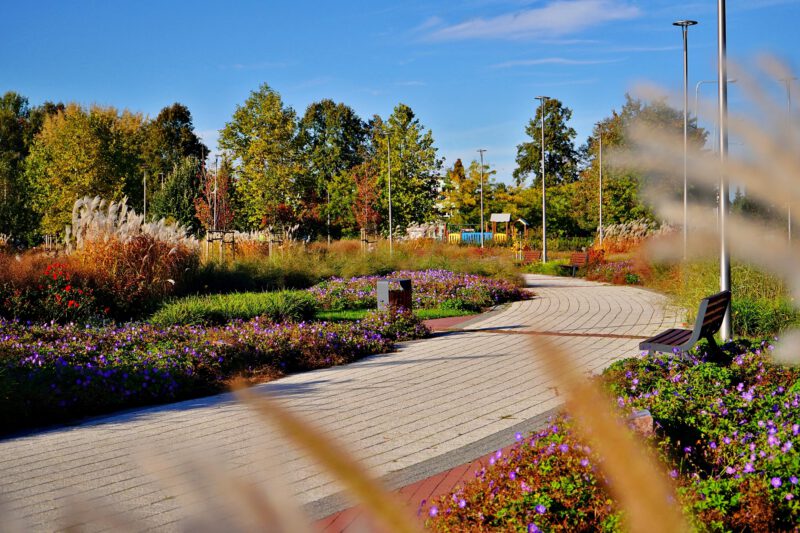
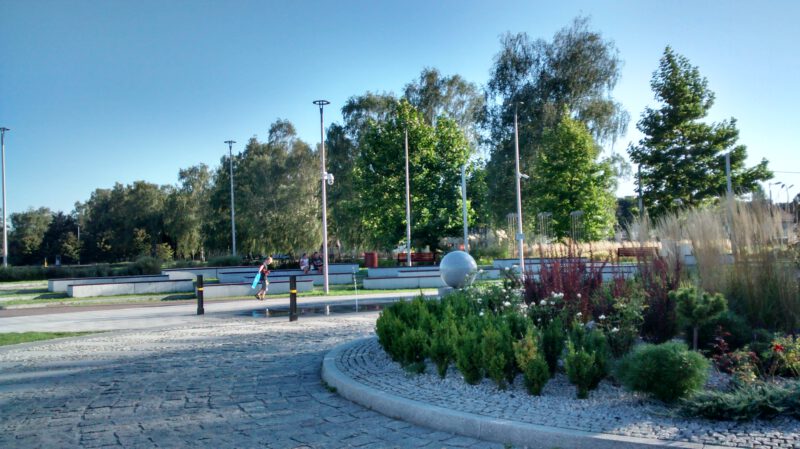
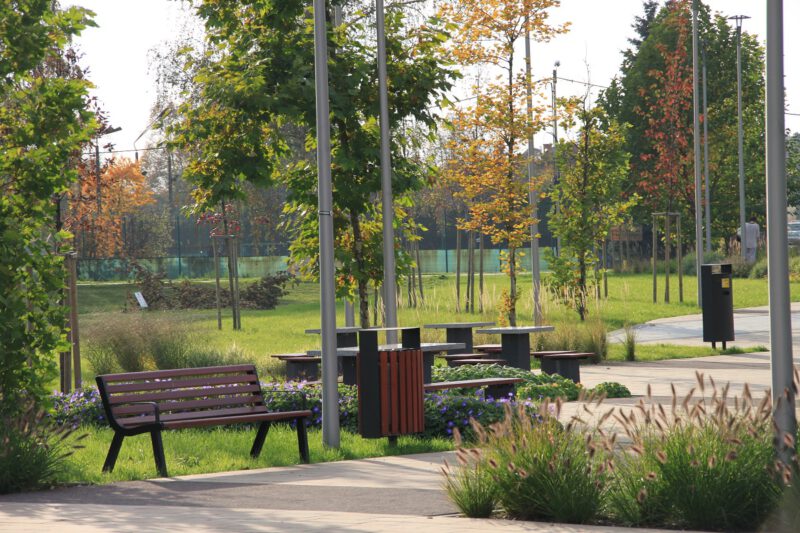
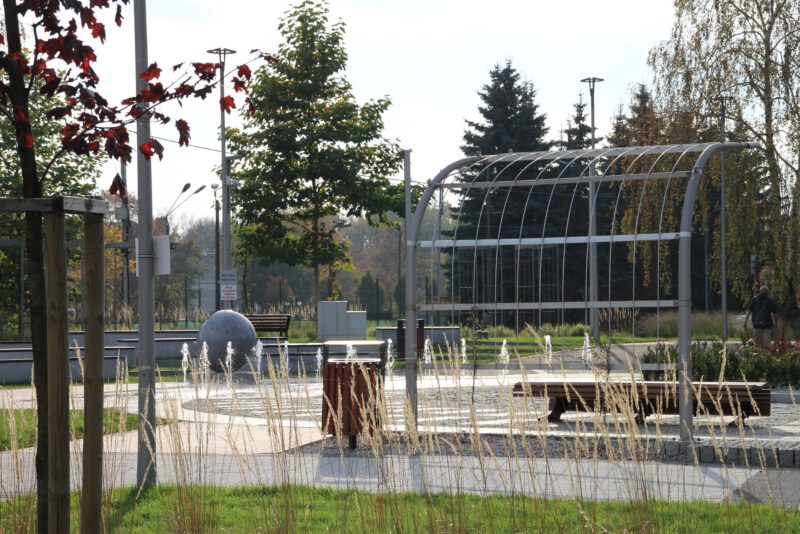
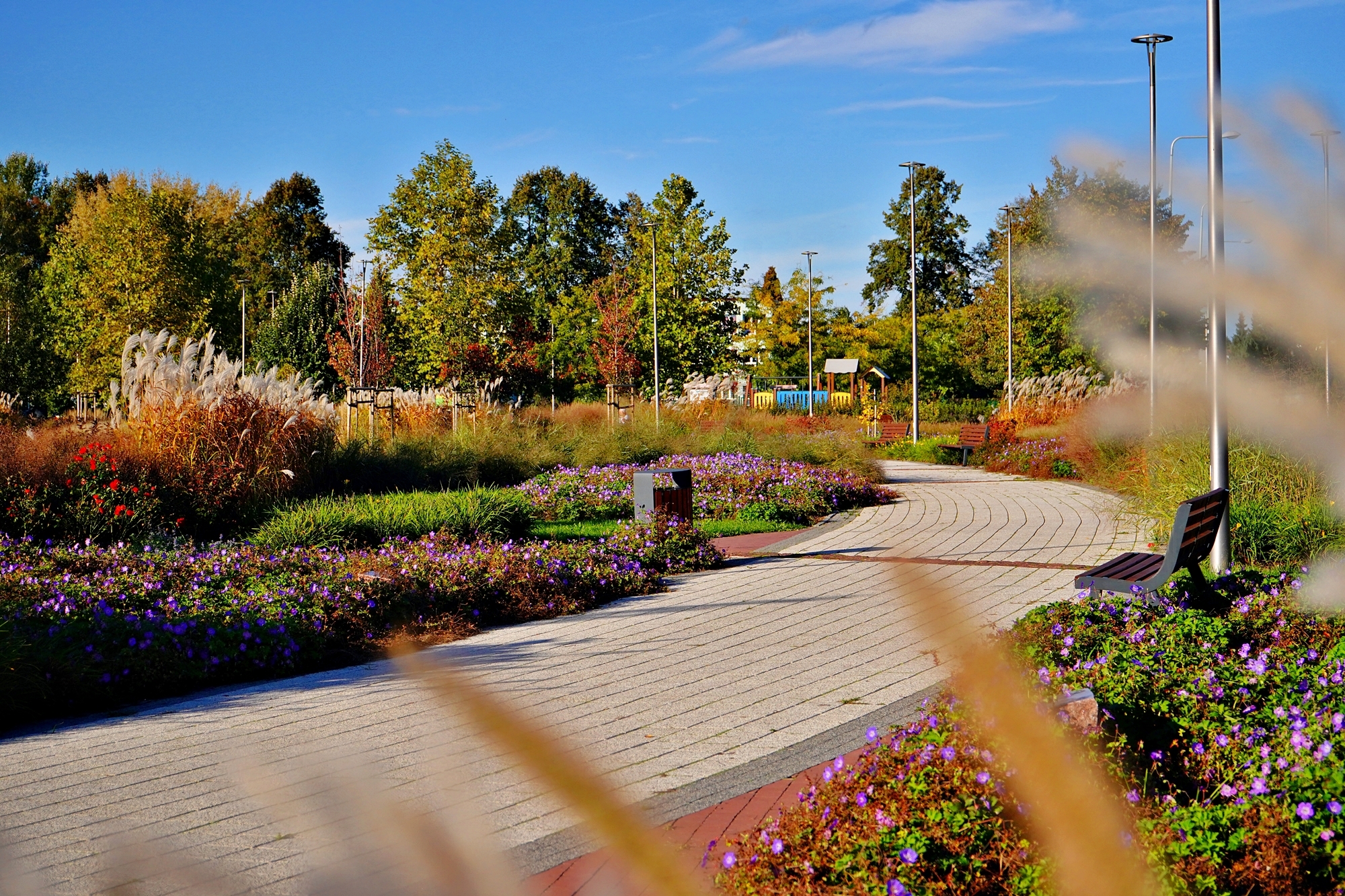
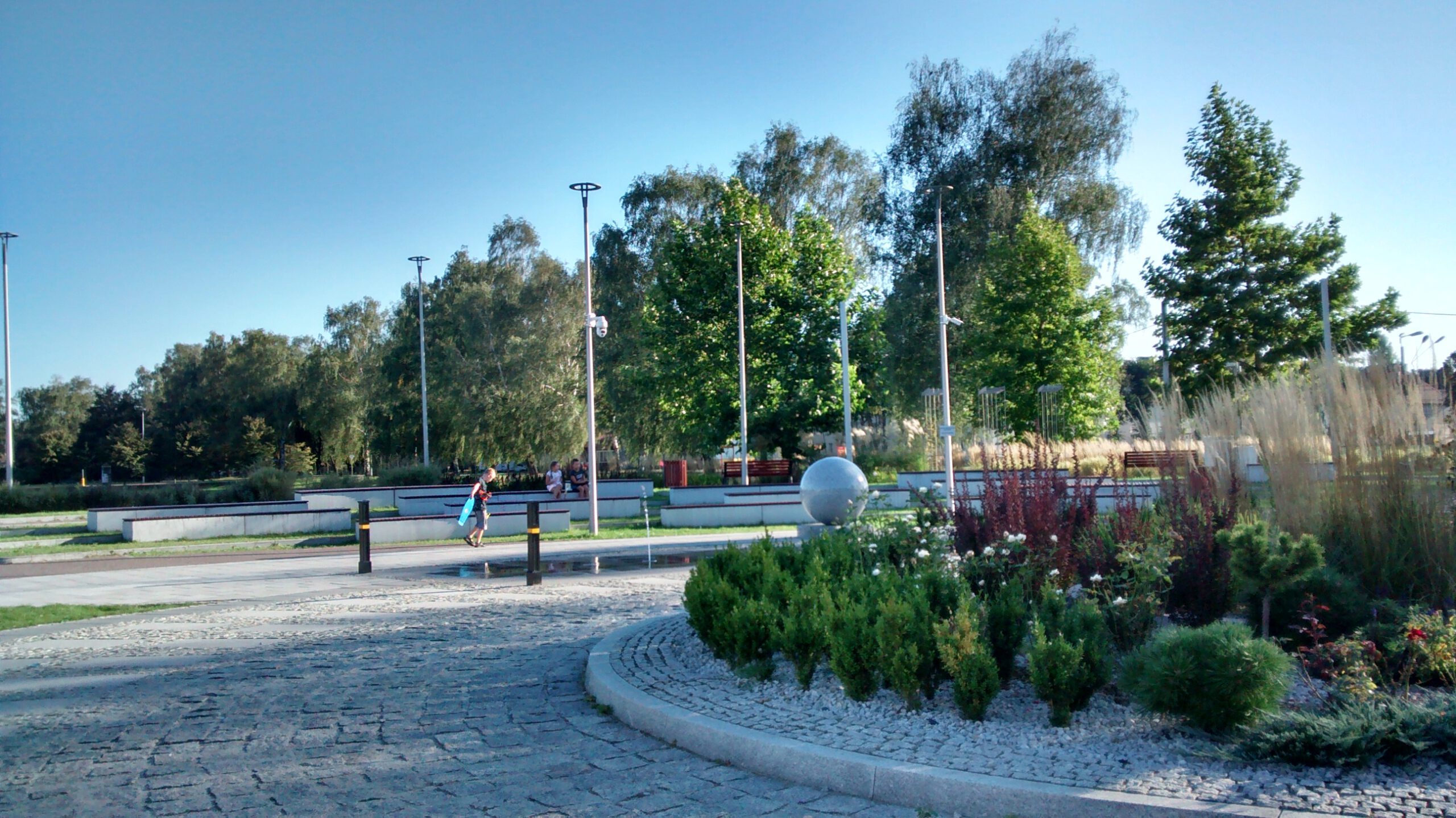
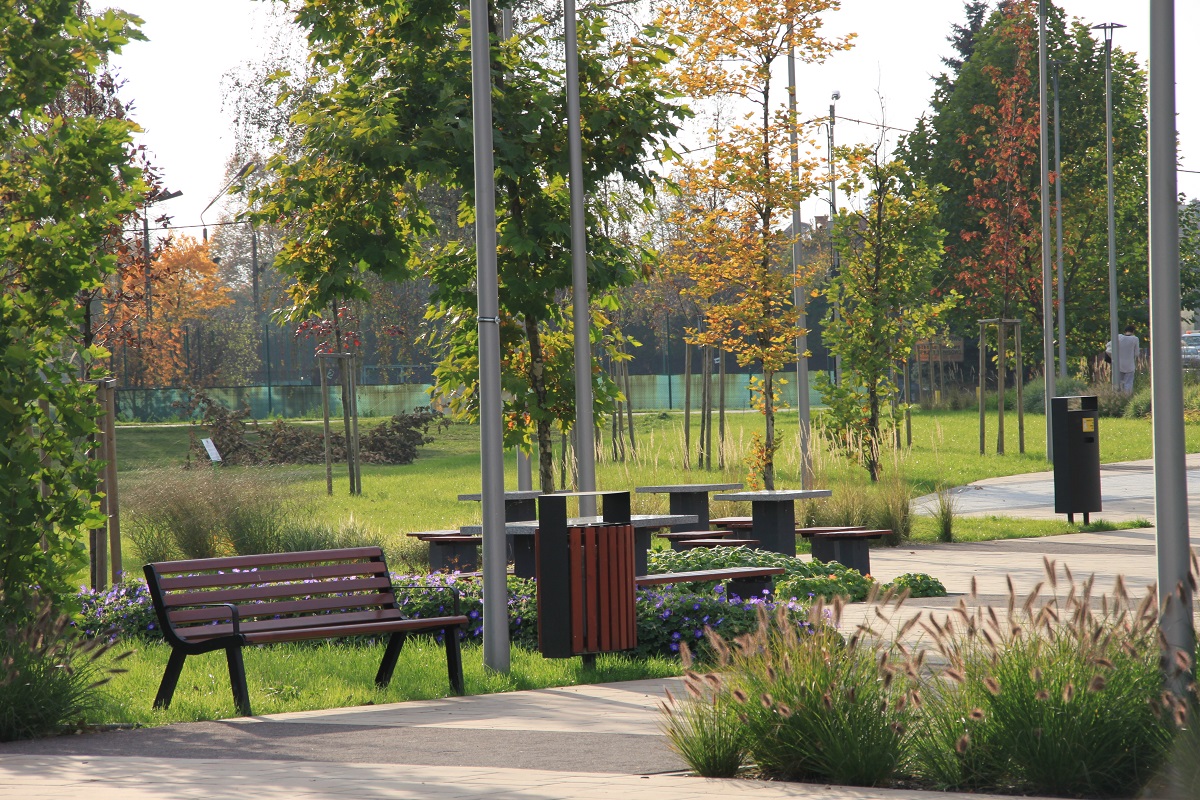
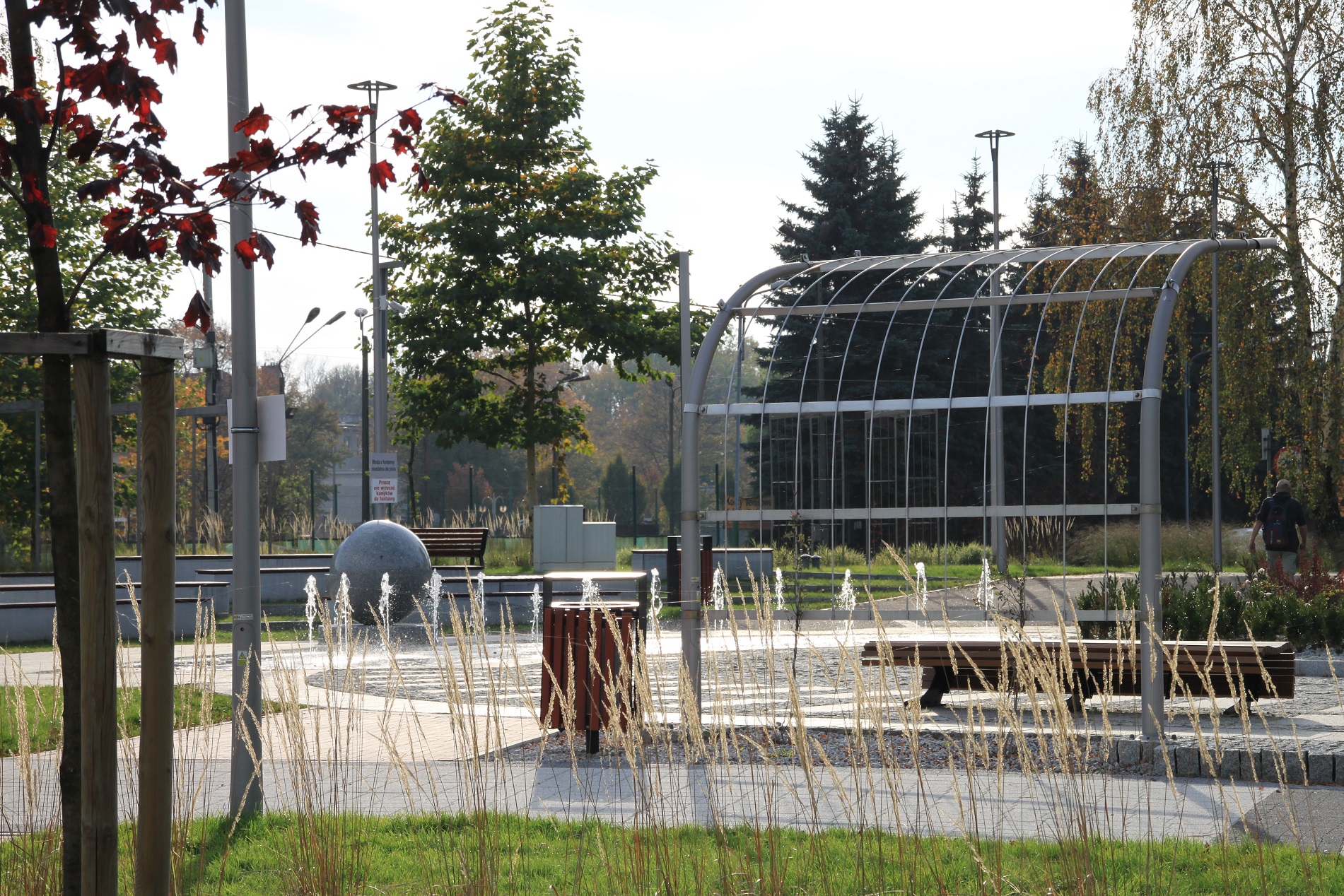
A municipal park, established in the Zasole estate between Więźniów Oświęcimia and Obozowa streets. It consists of a walking zone with flower pergolas and lush vegetation, a health zone with paths, an outdoor gym together with a playground for children, and a water curtain-shaped fountain that separates the square from the main communication route with benches and tables for board games.
As a result of the park’s expansion with an additional section, the area was enlarged and landscaped with trees in such a way as to create a natural transition between the Memorial Site and the Zasole residential district.The park is conducive not only to walking and recreation but also to reflection, as the designated Peace Trees Avenue features 17 trees originating from cities that serve as symbols of places particularly marked by history.A small obelisk dedicated to Captain Witold Pilecki has also been erected within the park grounds.

Kontakt

Centrum Informacji Turystycznej w Oświęcimiu

ul. Wyzwolenia 1
32-600 Oświęcim
tel.: 33 843 00 91
mail: it.oswiecim@msit.malopolska.pl
www: www.it.oswiecim.pl

Kontakt

Miejski Punkt Informacji Turystycznej

ul. Rynek Główny 2
32-600 Oświęcim
tel. 885 843 472
mail: it.ratusz@mosir.oswiecim.pl
www: www.it.oswiecim.pl